TLDR: Hardscaping transforms Columbus, Ohio yards with patios, retaining walls, walkways, fire pits, and outdoor kitchens. This guide covers project types, the best materials for Ohio’s freeze-thaw climate, 2026 cost ranges, design tips, seasonal timing, and how to choose a qualified hardscaping contractor in Columbus.
What Is Hardscaping and Why It Matters for Columbus Homeowners
Hardscaping refers to the non-living structural elements of your outdoor space — patios, retaining walls, walkways, fire pits, steps, and outdoor kitchens. While landscaping focuses on plants, trees, and turf, hardscaping provides the permanent foundation that defines how you use your yard.
For Columbus, Ohio homeowners, hardscaping is more than an aesthetic upgrade. Central Ohio’s clay-heavy soils, seasonal drainage challenges, and dramatic freeze-thaw cycles mean that well-engineered hardscape features solve real functional problems: managing water runoff on sloped lots, creating usable outdoor living space on uneven terrain, and adding structure that holds up through harsh winters and humid summers.
A professionally designed and installed hardscape also delivers one of the strongest returns on investment in home improvement. According to the National Association of Realtors, well-executed outdoor living projects can recoup 50% to 80% of their cost at resale — and in competitive Columbus neighborhoods like Upper Arlington, Dublin, and Worthington, a quality patio or outdoor kitchen can be the difference between a showing and a sale.
Types of Hardscaping Projects
Paver Patios
Paver patios are the most popular hardscaping project in the Columbus area and for good reason. Interlocking concrete pavers create a durable, low-maintenance outdoor living surface that handles Ohio’s weather far better than poured concrete. Unlike a solid slab, individual pavers flex with the ground as it freezes and thaws, preventing the large cracks that plague concrete patios throughout central Ohio.
Common patio sizes for Columbus homes range from 200 square feet (a cozy dining area) to 600+ square feet (a full outdoor entertaining space). Popular patterns include herringbone, running bond, and ashlar, with colors that complement the brick and stone facades typical of central Ohio architecture. A well-designed paver patio can serve as the anchor for your entire outdoor living space, connecting seamlessly to walkways, fire pits, and gardens. Learn more about our patio installation services.
Retaining Walls
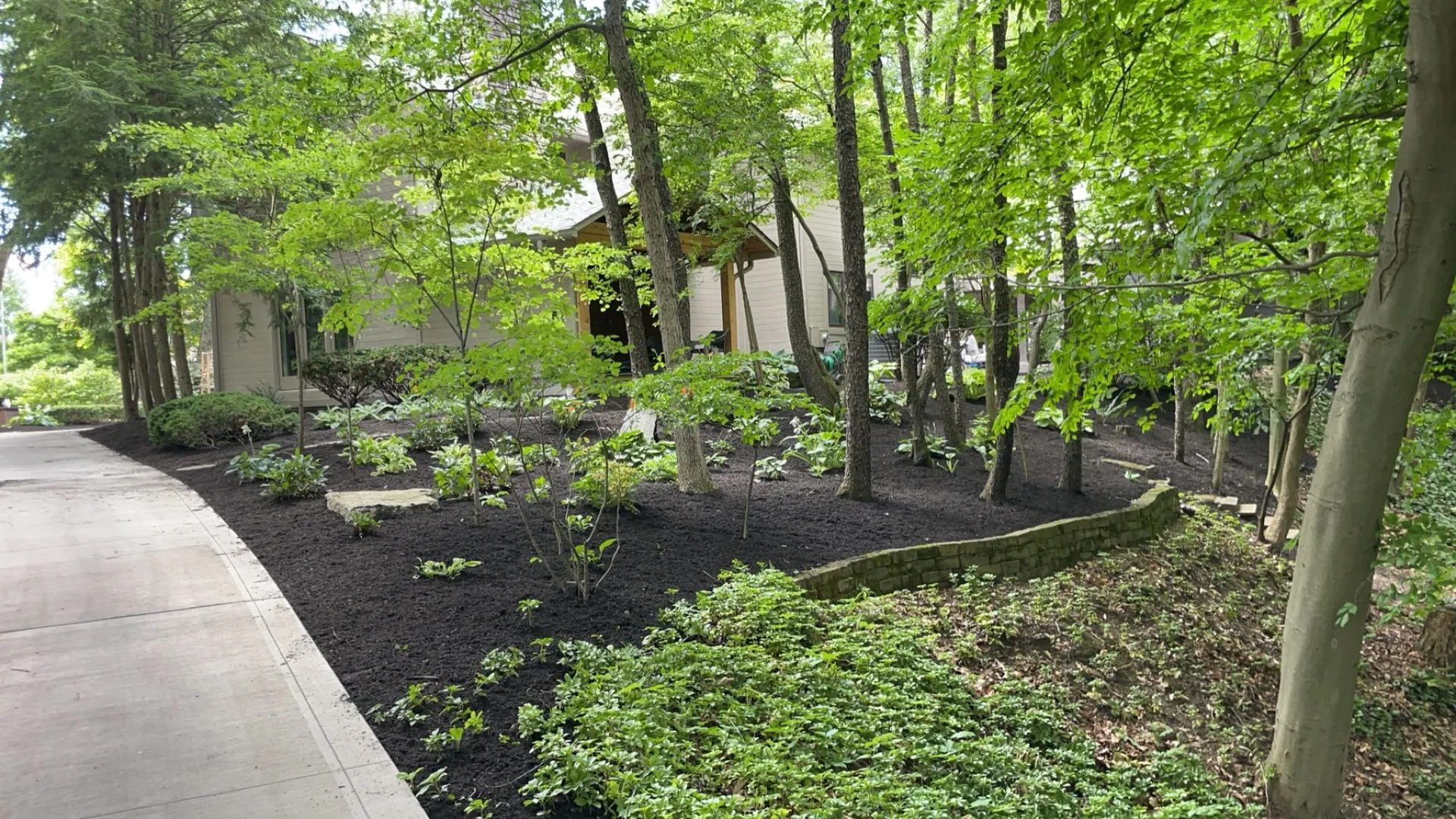
Columbus sits on rolling terrain, and many properties — especially in areas like Clintonville, Bexley, and the Olentangy River corridor — have grade changes that require retaining walls. These structures hold back soil, prevent erosion, and create level terraces for gardens, patios, or play areas.
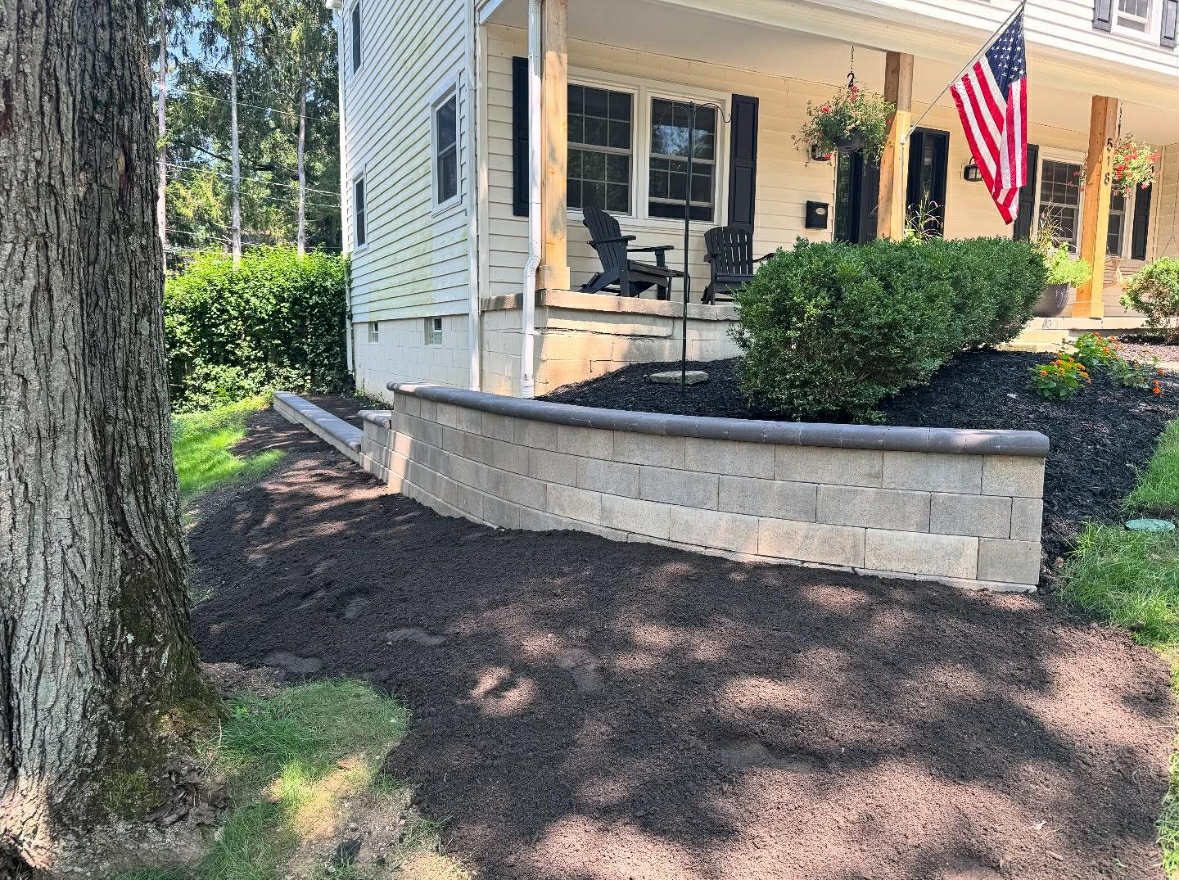
Retaining walls under 4 feet can typically be built with segmental block systems (like Unilock or Belgard wall units) without engineering. Walls over 4 feet in Franklin County generally require engineered designs with geogrid reinforcement and building permits. Beyond function, retaining walls add dramatic visual appeal — tiered walls with built-in lighting or integrated planters turn a problem slope into a showpiece. Explore our retaining wall solutions.
Walkways and Pathways
A well-designed walkway does more than connect your driveway to your front door. It sets the first impression of your home, guides visitors safely across your property, and eliminates muddy shortcuts across the lawn. In Columbus, where spring rains can turn clay soil into a slippery mess, a properly graded paver or natural stone walkway is both a safety feature and a curb appeal booster.
Front entry walkways are typically 4 to 5 feet wide (enough for two people to walk side by side), while garden paths can be as narrow as 2 to 3 feet. Materials range from budget-friendly concrete pavers to premium bluestone or flagstone for a more natural look.
Fire Pits and Fireplaces
Fire pits have become one of the most requested hardscape features among Columbus homeowners. Ohio’s long fall season — from late September through November — is perfect for outdoor fire pit gatherings, and a built-in fire feature extends your outdoor living season by weeks or even months.
Options range from simple round fire pits (starting around $1,500 installed) to elaborate gas-fed fireplaces with stone surrounds ($5,000 to $15,000+). Wood-burning fire pits are the most popular choice in Columbus, though gas fire features offer push-button convenience and no smoke. Most Columbus suburbs allow residential fire pits with standard setback requirements (typically 10 to 15 feet from structures).
Outdoor Kitchens
Outdoor kitchens are the premium tier of hardscaping, combining a built-in grill, countertops, storage, and sometimes sinks, refrigerators, or pizza ovens into a weather-resistant structure. In Columbus, outdoor kitchens are most common in neighborhoods like Dublin, New Albany, and Upper Arlington where lot sizes and budgets support the investment.
A basic outdoor kitchen with a built-in grill and counter space starts around $8,000 to $12,000. Fully equipped kitchens with natural stone or granite countertops, appliances, and overhead structures (pergolas or pavilions) can exceed $50,000. The key to an outdoor kitchen in Ohio is proper material selection — countertop materials must handle freeze-thaw cycles, and appliance connections need to be designed for seasonal use.
Seat Walls and Steps
Seat walls serve double duty as both a retaining or border structure and casual seating. They are especially popular around fire pits and patios, providing a clean, permanent seating option that eliminates the need for extra furniture. Typical seat wall height is 18 to 20 inches — comfortable sitting height — with a smooth capstone on top.
Hardscape steps replace deteriorating concrete or wooden stairs with durable paver or natural stone treads. In Columbus, where freeze-thaw cycles wreak havoc on poured concrete steps, well-built hardscape steps with a proper compacted base can last decades without cracking or heaving.

Best Materials for Ohio’s Climate
Material selection is arguably the most important decision in any Columbus hardscaping project. Central Ohio’s climate is tough on outdoor structures: winter temperatures drop below zero, summer highs push past 90 degrees, and the region averages 40+ freeze-thaw cycles per year. Here is how the most common materials perform.
Concrete Interlocking Pavers (Recommended)
Concrete interlocking pavers are the gold standard for hardscaping in Ohio. Brands like Unilock and Belgard manufacture pavers specifically engineered for freeze-thaw climates, with compressive strengths of 8,000+ PSI (compared to roughly 3,000 PSI for standard poured concrete).
Key advantages for Columbus homeowners:
- Flex, don’t crack: Individual pavers move independently with ground movement, preventing the large cracks common in concrete slabs
- Easy repairs: A damaged paver can be replaced individually without redoing the entire surface
- Drainage options: Permeable paver systems allow water to filter through, reducing runoff — increasingly important as Columbus grows and manages stormwater
- Variety: Hundreds of colors, textures, and patterns from natural stone looks to modern clean lines
- Longevity: 25 to 50+ year lifespan with minimal maintenance (occasional polymeric sand refill and sealing)
Unilock’s EnduraColor technology and Belgard’s Mega-Bergerac line are particularly popular with Columbus contractors for their color retention and durability in Ohio’s climate.
Natural Stone
Natural stone — including bluestone, limestone, travertine, and flagstone — offers an organic, high-end aesthetic that many Columbus homeowners love. Bluestone is the most popular natural stone choice in central Ohio because its blue-gray tones complement the region’s traditional brick and stone architecture.
Natural stone costs more than concrete pavers (typically $20 to $45 per square foot installed) but provides a distinctive look that cannot be exactly replicated. The main consideration in Ohio is that some softer stones like sandstone can absorb water and spall during freeze-thaw cycles. Work with a contractor experienced in Ohio installations who knows which stone varieties hold up in this climate.
Stamped Concrete
Stamped concrete is a budget-friendly alternative that uses patterned molds to mimic the look of pavers or natural stone on a poured concrete surface. It costs roughly $12 to $20 per square foot in Columbus — less than pavers for the same area.
The tradeoff is durability. Stamped concrete is still a solid slab, which means it is susceptible to the same freeze-thaw cracking that affects plain concrete in Ohio. Surface sealer needs to be reapplied every 2 to 3 years to maintain the color and protect against moisture penetration. Repairs are also more complicated — a crack in stamped concrete cannot be fixed as easily as replacing a single paver.
Porcelain Pavers
A newer option gaining popularity in Columbus is porcelain pavers. These ultra-dense, non-porous tiles offer exceptional freeze-thaw resistance (less than 0.5% water absorption) and come in stunning designs that mimic wood, marble, and concrete. They are more expensive ($25 to $40 per square foot installed) but virtually maintenance-free and stain-proof — ideal for outdoor kitchens and pool decks.
Hardscaping Cost Guide for Columbus, Ohio (2026)
Understanding pricing helps you plan a realistic budget and evaluate contractor quotes. Here are typical installed costs for hardscaping projects in the Columbus metro area as of 2026:
| Project Type | Price Range (Installed) | Typical Project Cost |
|---|---|---|
| Paver Patio | $15 – $30 per sq ft | $4,500 – $9,000 (300 sq ft) |
| Retaining Wall | $25 – $50 per sq ft (face) | $3,000 – $15,000 |
| Walkway | $10 – $25 per sq ft | $1,500 – $5,000 (50–80 ft) |
| Fire Pit | $1,500 – $5,000 | $2,500 – $3,500 (most common) |
| Outdoor Kitchen | $8,000 – $50,000+ | $12,000 – $25,000 |
| Seat Wall | $30 – $60 per linear ft | $1,200 – $3,600 (20–60 ft) |
| Steps (Hardscape) | $150 – $300 per step | $900 – $2,400 (3–8 steps) |
| Full Outdoor Living Space | — | $15,000 – $50,000+ |
What affects pricing: Project size, material selection (Unilock/Belgard premium pavers vs. standard), site access (backyard access for equipment), base preparation (clay soil often requires deeper excavation in Columbus), demolition of existing surfaces, drainage additions, and design complexity (curves and patterns cost more than straight lines).
Pro tip: Many Columbus hardscaping contractors offer better pricing for projects booked in the fall and winter for spring installation. If you are planning a major project, reaching out in January or February can save you 5% to 10% and guarantee an early-season start.
Design Tips for Your Columbus Hardscape
Complement Your Home’s Architecture
The most successful hardscape designs feel like a natural extension of the home. Columbus has a wide range of architectural styles — brick colonials in Bexley, mid-century ranches in Clintonville, modern builds in the Short North, and estate homes in Dublin — and your hardscape materials and design should complement that style.
A general rule: match the color temperature. Warm-toned brick homes pair well with tan, brown, and warm gray pavers. Cooler stone or painted exteriors look best with charcoal, blue-gray, or slate-toned materials. When in doubt, pull a color from your home’s existing stone, brick, or trim and find a paver that echoes it.
Plan for Drainage First
Drainage is the most overlooked element in hardscape design, and in Columbus, it is arguably the most important. Central Ohio’s clay soil drains poorly, and adding hundreds of square feet of impervious surface (a patio) concentrates water that used to soak into the ground.
Every hardscape project should include a drainage plan that addresses:
- Surface grading (minimum 1% slope away from the house — that is 1 inch of fall per 8 feet)
- Downspout and gutter discharge locations
- French drains or channel drains where water collects
- Permeable paver options for areas with drainage challenges
A contractor who starts talking about drainage before discussing paver colors is a contractor who knows what they are doing in Ohio.
Think About Lighting
Low-voltage LED landscape lighting extends the usability of your hardscape into the evening and adds safety to steps, walkways, and changes in elevation. In Columbus, where summer daylight lasts until 9 PM but fall evenings get dark by 6 PM, integrated lighting is a smart investment. Popular options include step lights built into retaining walls, paver lights recessed into walkways, and uplighting on seat walls and columns.
Permits in Columbus and Surrounding Areas
Permit requirements vary by municipality in the Columbus metro area:
- City of Columbus: Patios at grade generally do not require permits. Retaining walls over 4 feet require a building permit. Any work in a floodplain requires special review.
- Dublin, Upper Arlington, Worthington, Westerville: Similar rules — check with each city’s building department for specific setback and height requirements.
- HOA communities: Many Columbus-area HOAs require architectural review board approval for any exterior modifications, including patios and walls. Submit plans early — approval can take 2 to 6 weeks.
A reputable hardscaping contractor will know the permit requirements for your specific location and handle the application process as part of the project.
Seasonal Timeline: When to Start Your Hardscape Project in Columbus
Timing matters in central Ohio. The construction season is driven by ground conditions, temperatures, and contractor availability:
January – February (Planning Season): The best time to research, get design consultations, and lock in a contractor for spring. Many Columbus contractors offer early-booking discounts. Ground is frozen, so no construction occurs.
March – April (Early Season): Ground begins to thaw in mid-March. Excavation and base work can start once the frost is out of the ground (typically late March in Columbus). This is the most competitive booking window — contractors fill their spring schedules fast.
May – June (Peak Season): Prime construction weather. Longest days, warm temperatures, and dry conditions make this the busiest time for hardscape installation. Expect 4 to 8 week lead times if you have not already booked.
July – August (Mid-Season): Construction continues, though extreme heat can slow some work. This is actually a great time to start a project — the spring rush has passed, and materials are readily available.
September – November (Late Season): Excellent construction weather returns as temperatures cool. Many homeowners do not realize that fall is one of the best times for hardscaping in Ohio. Ground is dry, temperatures are moderate, and contractors often have more availability. Projects started by early October can typically be completed before the ground freezes.
December (Off-Season): Most hardscape construction pauses. Use this time to plan, budget, and schedule your project for the following year.
How to Choose a Hardscaping Contractor in Columbus
Your contractor is the single biggest factor in the success of your hardscape project. The difference between a patio that lasts 25 years and one that settles and shifts within 3 years comes down to installation quality. Here is what to look for and what to avoid.
What to Look For
- Hardscape-specific experience: Lawn mowing companies and general landscapers often offer hardscaping, but it is a specialized trade. Look for a contractor whose primary business is hardscape installation, with at least 3 to 5 years of focused experience.
- A strong portfolio: Ask for photos of completed projects — ideally in the Columbus area, so you can see how their work holds up in Ohio conditions. Even better, ask if you can visit a completed project in person.
- References you can actually call: Not just testimonials on a website. Ask for 3 to 5 recent client references and actually call them. Ask about communication, timeline accuracy, cleanup, and whether they have noticed any issues since completion.
- Proper insurance: General liability insurance ($1 million minimum) and workers’ compensation coverage. Ask for a certificate of insurance — a legitimate contractor will provide this without hesitation.
- Written warranty: A quality contractor stands behind their work with a written warranty on both materials and labor. Industry standard is 2 to 5 years on workmanship.
- Detailed written estimates: A professional estimate should itemize materials, labor, base preparation, excavation, drainage, and any site-specific work. Beware of single-line-item quotes.
- ICPI certification: The Interlocking Concrete Pavement Institute (ICPI) offers installer certification that demonstrates technical knowledge. It is not required, but it is a positive signal.
Red Flags to Watch For
- No written contract: Never proceed without a detailed written contract that specifies scope, materials, timeline, payment schedule, and warranty terms.
- Demanding full payment upfront: A standard payment structure is 10% to 30% deposit, progress payments tied to milestones, and final payment upon completion. Any contractor asking for 50%+ upfront is a risk.
- No base preparation details: If a contractor does not discuss excavation depth, base material (typically 6 to 8 inches of compacted gravel in Columbus), and compaction methods, they may be cutting corners on the most critical part of the installation.
- Unusually low pricing: If one bid comes in 40%+ below the others, something is being skipped. Common shortcuts include insufficient base depth, skipping geotextile fabric, and not using edge restraints.
- No drainage plan: In Columbus, any contractor who does not address drainage is not qualified for the job.
- Pressure to sign immediately: A reputable contractor gives you time to review the proposal. High-pressure sales tactics are a red flag.
Why Columbus Homeowners Choose Grounded Landscaping
At Grounded Landscaping, hardscaping is our specialty — not a side service. We are a Columbus-based team that focuses on designing and building outdoor living spaces that last. Here is what sets us apart:
- Hardscape-first expertise: We specialize in paver patios, retaining walls, walkways, fire pits, and complete outdoor living spaces throughout the Columbus metro area.
- Premium materials: We work with Unilock, Belgard, and select natural stone suppliers to ensure every project is built with materials rated for Ohio’s climate.
- Proper base construction: Every project starts with a correctly engineered base — excavated to the right depth, backfilled with compacted aggregate, and graded for drainage. This is where longevity is built.
- Transparent pricing: Detailed, itemized estimates with no hidden fees. We walk you through every line item so you know exactly what you are paying for.
- Columbus-area focus: We serve Upper Arlington, Dublin, Powell, Worthington, Westerville, Clintonville, Bexley, New Albany, Grandview Heights, and surrounding Columbus communities. Our team knows the local soil conditions, drainage patterns, and permit requirements for each area.
- Free on-site consultations: We meet you at your home, assess your property, discuss your vision, and provide a detailed proposal — no obligation, no pressure.
Ready to transform your outdoor space? Contact Grounded Landscaping today to schedule your free hardscaping consultation. We will visit your property, discuss your goals, and provide a detailed estimate — no obligation. Call us at (614) 674-1839 or fill out our contact form to get started.
Related Services
- Patio Installation in Columbus, OH
- Retaining Wall Construction
- All Landscaping Services
- Request a Free Estimate
Frequently Asked Questions About Hardscaping in Columbus
How much does a paver patio cost in Columbus, Ohio?
In Columbus, OH, a professionally installed paver patio typically costs between $15 and $30 per square foot. A standard 300-square-foot patio runs $4,500 to $9,000 installed. Final pricing depends on the paver brand (Unilock and Belgard are premium options), pattern complexity, base preparation, and site access. Always get at least two to three written estimates from licensed contractors.
What is the best time of year to start a hardscaping project in central Ohio?
The ideal window for hardscape construction in Columbus is late March through mid-November. Most contractors book heavily in April and May, so scheduling your project in late winter gives you the best chance of a spring start. Design consultations can happen any time of year, and planning during the winter months often means faster turnaround once the ground thaws.
Do I need a permit for a patio or retaining wall in Columbus?
In Columbus and most Franklin County suburbs, standard patios at ground level typically do not require a building permit. However, retaining walls over 4 feet in height generally require a permit and engineered drawings. If your project involves grading changes, drainage modifications, or is near a property line, check with your local building department before construction begins.
How long does a hardscape installation take from start to finish?
A typical paver patio takes 3 to 5 days of on-site work once materials are delivered. Retaining walls range from 2 to 7 days depending on height and length. A full outdoor living space with a patio, fire pit, and seat walls may take 2 to 4 weeks. Add 2 to 4 weeks of lead time for design, material ordering, and scheduling, especially during peak season (April through June).
What hardscape materials hold up best in Ohio’s freeze-thaw climate?
Concrete interlocking pavers from brands like Unilock and Belgard are the top choice for central Ohio because they flex with freeze-thaw cycles instead of cracking. Natural stone like bluestone and limestone also performs well when installed on a proper compacted base with adequate drainage. Stamped concrete is a budget-friendly option but is more prone to surface cracking in Ohio winters and may need resealing every 2 to 3 years.